Friday, June 14, 2013

ISLE 7th (and last) project meeting

The 7th (and last) project meeting of ISLE took place in the lovely premises of the Lighthouse Golf and Spa Resort in Balchik and the International University College (IUC) in Dobrich, Bulgaria, hosted by the IUC partner of the ISLE Network, between 10-14/6/2013. Due to various reasons, I could not attend the two first days of the meeting (in fact, Monday is always the day for travelling and only a dinner takes place, so I only missed Tuesday).

My trip to Balchik was rather long, as due to delays in flights from Athens to Sofia and from Sofia to Varna, I left Athens at 21.30 and reached the hotel room at 03.30 - the taxi ride from the Varna airport to the hotel took almost one hour! It was really hard for me to wake up at 07.30 next morning as expected but still managed to do so...


The program of the meeting was full and I was glad to see that things were progressing since the last time I joined the consortium (I missed the previous project meeting). There were interesting and long discussions related to sustainability of the project and its outcomes, based on predefined questions, while a reporting took place at the end of the day, summarizing the discussions and proposing specific actions.

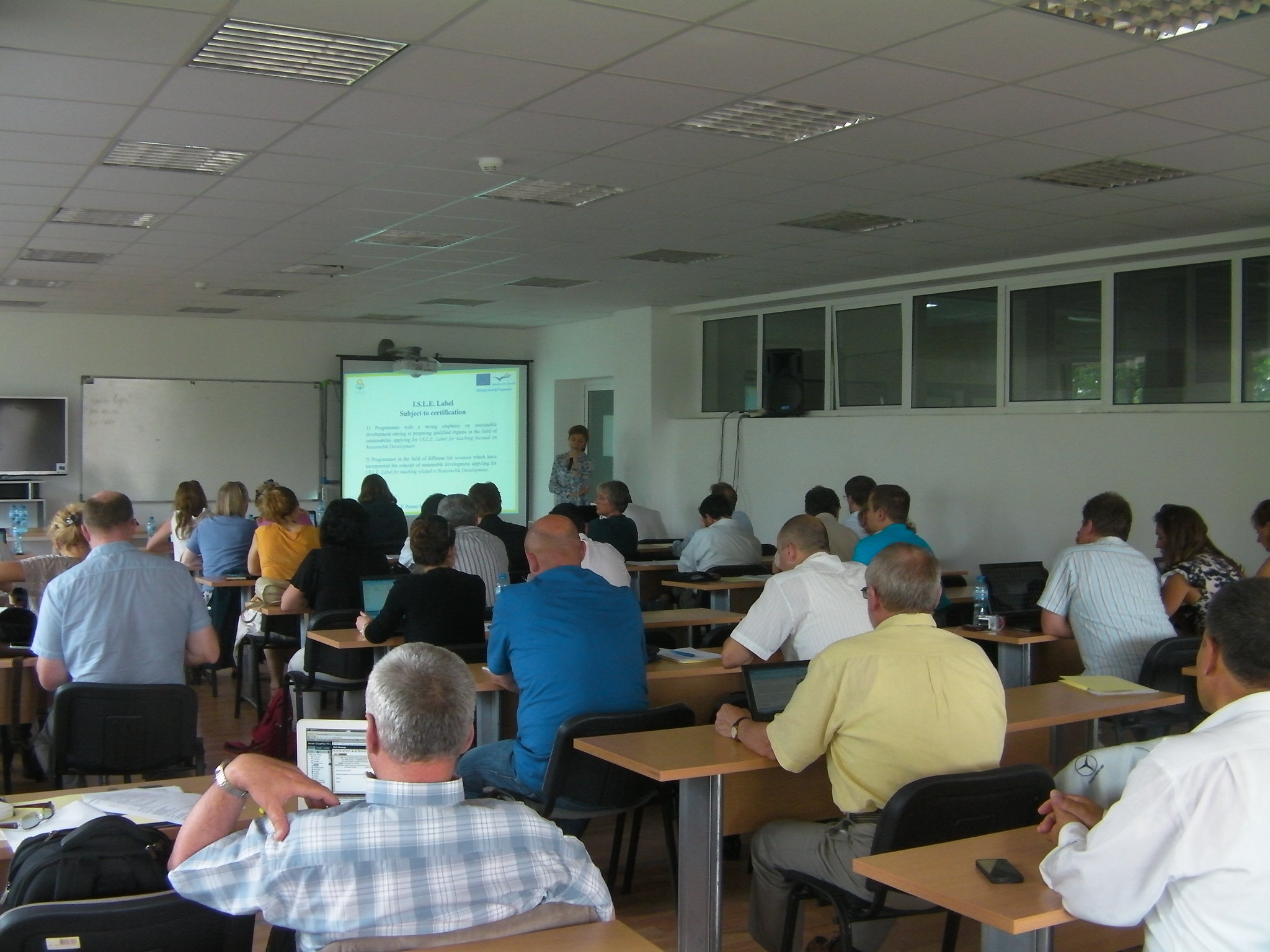
Presentation of the ISLE Quality Label by Christina Armutlieva
My presentation was held on Thursday and had to do with both the dissemination activities (Agro-Know is the Dissemination WP leader in this project) and the post-project dissemination and sustainability ones. My colleagues have been working on the corresponding deliverable so it was easy for me to prepare the presentation. I also made use of the really interesting analytics for the project web site and some additional ones for the Facebook page of the project; the participants seems to like this new approach!

In addition, the presentation made by the Harper Adams University College team who won the ISLE Students' competition was a really nice surprise; the students presented an interesting approach to recycling using a fresh presentation method. I filmed the whole presentation and discussion which followed after the presentation using my trustworthy Sanyo Xacti CG20. The video is available here.

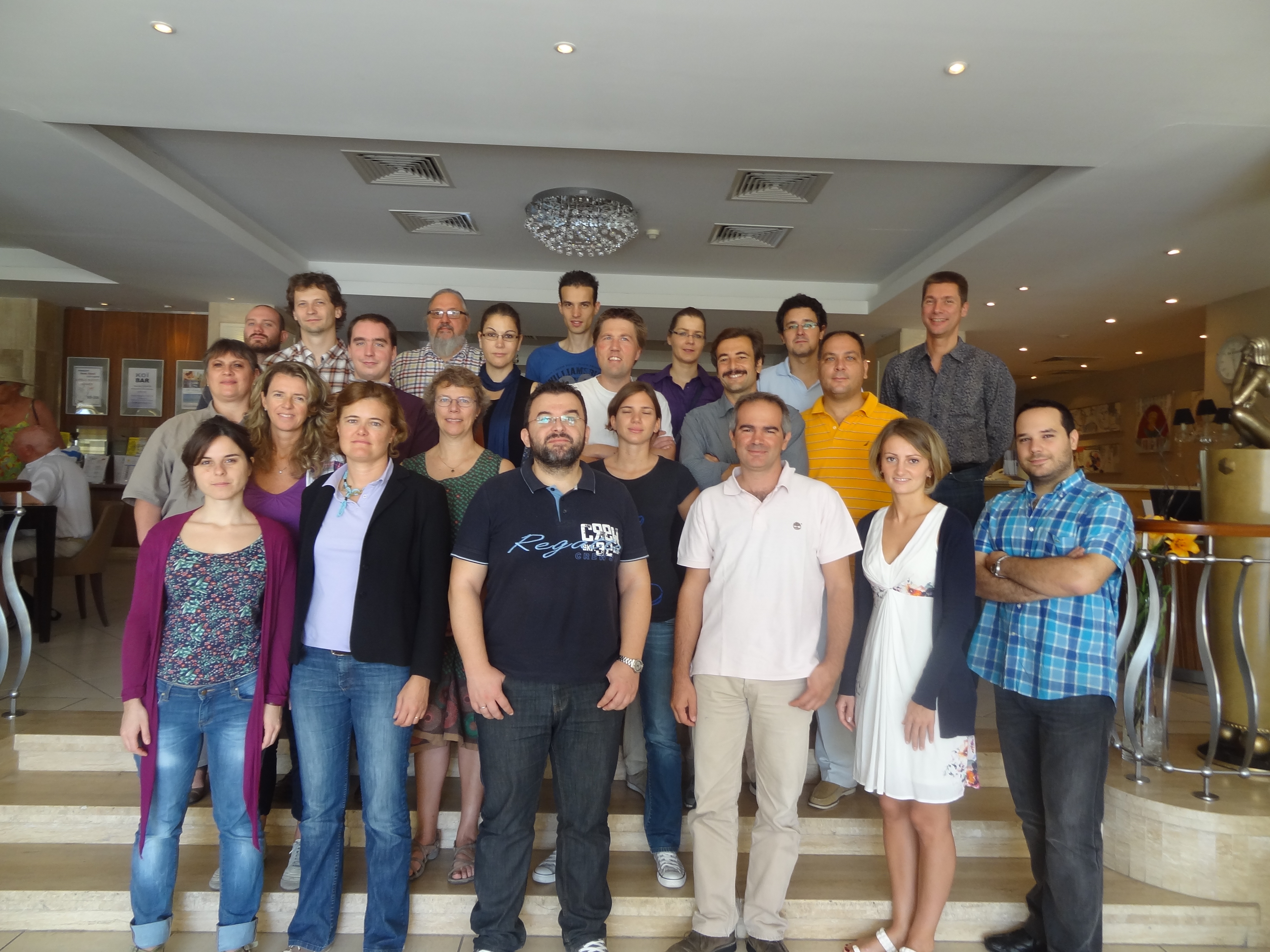
The HAUC team with Leticia and Corinne after the presentation 
The project ends on September 30th, 2013 and this was the last project meeting. While there is always the possibility that the proposal for the continuation of the project (ISLE 2) will be accepted, it was really strange for all participants to know that this would be the last time that they meet after almost 3 years and various meeting opportunities. I managed to miss only two of the project's meetings; the kick-off one (when I was not even aware of the project) and the 6th one in lovely Maribor, Slovenia, where a colleague of mine participated instead of me.
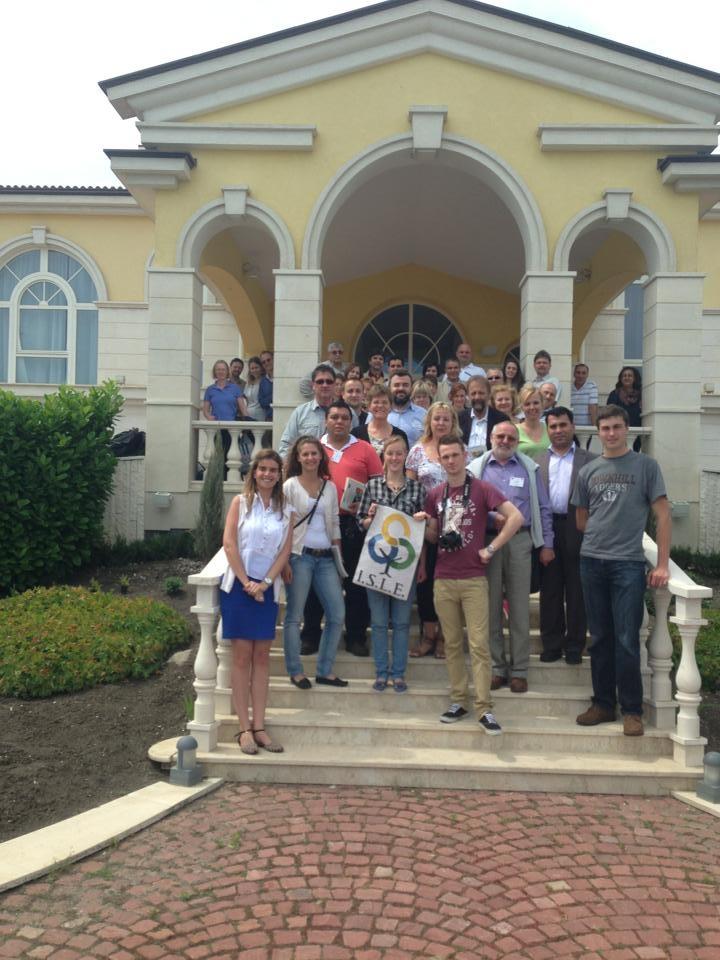
Last family photo of the ISLE Consortium members
I keep saying that the ISLE consortium is like a big family so each meeting is more like a family reunion and this last meeting just confirmed my point of view; it seems that I was not the only one to see things this way! I am really going to miss you guys!

Saturday, June 1, 2013

VOA3R - The end...

Well, there's not much to say now... the VOA3R project (Virtual Open Access Agriculture & Aquaculture Repository: Sharing Scientific and Scholarly Research related to Agriculture, Food, and Environment.), funded from the ICT Policy Support Programme (ICT PSP), Theme 4 – “Open access to scientific information”, grant agreement n° 250525, is officially over.

I wasn't a VOA3R member from the beginning back in June 2010; I first got involved in the VOA3R project in spring 2011, when I was invited to demonstrate the VOA3R Confolio repository tool in the VOA3R content providers' meeting which was held in the GRNET premises. After that, I started being more actively involved during the summer of 2011, when I was asked to work on the Content Population Methodology deliverable of the project and also participated in the VOA3R Workshop during the EFITA 2011 Conference in Prague, Czech Republic.

My first participation in an event as a VOA3R consortium member. VOA3R Workshop, EFITA 2011 Conference

Since then I was seriously involved in the project, working on the coordination of the content population tasks, organizing metadata evaluation sessions with the content providers, checking the metadata and the tools used for the annotation, explaining the process and the tasks. VOA3R was the biggest project that I had participated since then, so it was by opportunity to apply the experiences and methodologies from other smaller projects (mostly LdV) on a larger scale; I hope that I managed to do a good job!

The project provided me with the opportunity not only to meet a lot of really nice partners (like Ilse from ICROFS, with whom we had met a little bit earlier than VOA3R in a meeting of Organic Eprints National Editors) and also to travel to rather nice destinations for the project meetings (Izmir for the 4th PM, Paris for the 5th PM, Limassol for the 6th PM and Rome for the 7th PM). In addition, I was able to publish the outcomes of the VOA3R project in both journals and conferences.

Presenting the VOA3R platform to Greek agricultural researchers in  2011

The VOA3R project was really active during the 3 years of its life. Some of the project's outcomes are the following:
  • The VOA3R portal: A Facebook for agricultural researchers, as I used to say earlier, provides an excellent opportunity to publish your scientific profile, join user communities and share experiences etc. and access more than 2,500,000 bibliographic records related to agricultural research.
  • The VOA3R metadata AP: Based on the Dublin Core standard, it is a well-defined and thought metadata application profile, which comes in two flavors: A flat one (Level 2) and an advanced one, FRBR-based (Level 4).
  • The infrastructure for maintaining an ever-growing network of repositories from agricultural universities and research centers, to act as a part of the established FAO AGRIS Network, including a well-defined affiliation plan.
  • A study on the existing review and publication lifecycles and the proposal of alternative ones.
  • A metadata aggregation methodology, which may be adapted and reused in the future.
  • Publications in several journals and conferences, such as EFITA and MTSR.

One of the last family photos of VOA3R: Limassol, Cyprus, October 2012

The project will be judged in July 2013 during the 2nd and final review meeting, which will take place in Brussels, Belgium. In the meantime, we still have some time to fine-tune some things and finish pending tasks which were ongoing even at the end of the project.

You may find material about VOA3R at the following sites:

Thursday, May 30, 2013

Herbal.Mednet 2nd project meeting

The 2nd project meeting of the Herbal.Mednet project is taking place between 30th-31st of May at the premises of the Institute of Agricultural Sciences in Athens, Greece. I was for once more participating in the meeting (at least its first day) replacing my colleague Charalampos Thanopoulos who was participating at the 4th agINFRA project meeting in Budapest at the same time. Agro-Know is replacing EUMMENA in the consortium of the project and is responsible for various tasks, including the dissemination activities. 

The meeting provides the opportunity for the partners to meet and discuss the progress of the project and its outcomes, as well as to keep them updated of joint activities related to the project. My new colleague Andreas Drakos is the Agro-Know person mainly involved in the Herbal.Mednet project, bringing his tech-related background in the context of this project.

SERIFO presentation during the meeting
The 2nd Herbal.Mednet meeting provided me with the opportunity to see again my good friends and colleagues like Prof. G.V. Roman and Dr. Maria Toader from USAMVB, Tasos Choukalas from APIVITA and Victor Gonzalvez from Sociedad Española de Agricultura Ecológica, as well as meet partners whom I haven't met in the past.

Enayat (UAH) presenting the agriMoodle concept
The first day of the meeting will include a 3-hour stakeholders' meeting including university teachers, PhD students and candidates, practitioners, professionals etc. in the field of medicinal and aromatic plants in Greece. This will allow the collection of an additional number of requirements which will drive the next steps of the project, as well as bring closer the various stakeholders involved in the area of medicinal and aromatic plants.

Wednesday, May 29, 2013

Talking about data silos and data pools

Yesterday I was invited to participate and present in a meeting about networking projects about climate change. It was a meeting organized in the context of the OLIVE CLIMA - LIFE11 ENV/GR/000942 project and the participants (about 40 people) were mainly Greek agricultural researchers working in the same or related LIFE-funded projects, as well as representatives from the Ministry of Rural Development and Food and the Ministry of Environment, Energy and Climate Change. The meeting was hosted at the lovely premises of the Forest Research Institute, at Ilisia, Athens, Greece located within a large hill park.

During the introduction to the meeting, my friend Dr. George Koubouris highlighted the fact that the audience consisted of researchers who are working in the same context, share the same or similar research interests but still they were not familiar with each other. This was one of the points that I would like to highlight in my presentation, focusing on efforts like the VOA3R portal for networking agricultural researchers and of course AgriVIVO. During the presentations made by the project partners, I also realized the need for a centralized repository to host all their research outcomes (at least the ones developed in the context of their projects) so that they could be more easily accessible by a wider audience.

George Koubouris presenting
 My presentation was based on existing material developed for the dissemination purposes of agINFRA and was focused on the need for moving from the existing data silos (e.g. the individual and not (inter)connected web sites of the projects hosting the project's outcomes) to data pools (which would provide the opportunity for these outcomes to be reached by a much wider audience). There was also a short demonstration of the VOA3R portal, as a mean for Greek researchers to find a virtual space for sharing, creating their own community/communities and finding a common ground to for further collaboration. Unfortunately it had to be really short, it was the last one in the programme and there was already a significant delay in the original schedule.
The advantages of having the last presentation; your last slide remains there for longer!
The participants seemed to be interested in the contents of the presentation, as it was pointing exactly to their needs; I expect that to happen in each agINFRA presentation anyway, as the project is really promising. During the round table session, which was the last part of the meeting, agINFRA was proposed as the mean that they could use for making their collection publicly available in case they are interested. Specific questions were raised, mainly related to the licenses and rights that should be used for sharing their research outcomes, so CC Licenses as well as the existence of Data Exchange Agreements and Memorandi of Understanding.
Presenting the agINFRA approach on data pools

Thursday, May 23, 2013

The new Organic.Edunet Web portal is coming soon!

Well, it seems that the significantly revised version of the Organic.Edunet Web portal will be available in the next days, Anyone visiting the portal at http://www.organic-edunet.eu receives the following screen:

This leaves me anxious to see more!
I have a special connection with Organic.Edunet, as it was the first EU project that I was involved in (back in 2008, as a member of the AUA team) and my opportunity to join this amazing world of EU projects, working with metadata, digital collections/repositories, educational resources and training curricula, Web 2.0 tools etc. Now I am still involved in Organic.Edunet through my involvement in the Organic.Lingua project, which brings a lot of fresh stuff (both collections and new functionalities in the portal) to Organic.Edunet.

I have to admit that I have seen some mock-ups of the new portal, as well as a testing environment with the new interface, but there's nothing like the real thing! So let's wait for a couple of days before we see the revised version of the portal. :-)

Wednesday, May 15, 2013

VOA3R 7th project meeting - Joint session with SemaGrow

Just 15 days before its official end, VOA3R held its 7th and last project meeting at the FAO Headquarters in Rome, Italy between 14 & 15 of May 2013. As usually, all Work Packages were discussed in terms of their status (including each one of the individual pending deliverables) and actions to be taken by the end of the project were also defined and discussed. Everything should be ready before the 2nd (and last) Review Meeting of the project, which will be held on July 18th, 2013 at Brussels, Belgium.

Not only has VOA3R a revised website, but there have been revisions in the VOA3R portal as well, including a change in the URL. The new one is much easier to remember: http://www.voa3r.org!
Among the revisions in the portal the major ones are related to the improvement / refinement of the search mechanisms, as well as bug fixes and usability issues.

I also had the opportunity to participate in the first day of the SemaGrow project meeting on Monday morning, which took place at the premises of Tor Vergata University, quite far from the center of Rome - it was expensive reaching that and tricky reaching the center of Rome after the end of the meeting. I had the opportunity to meet colleagues from UAH (Miguel-Angel and Jaakko), NCSR (Pythagoras) and of course meet new people as always, like Vangelis and Caterina. I was mainly interested in the data sources for this project, as this is a task that I am closely following and contributing to.


SemaGrow held a joint session with VOA3R partners, during which both presentations and interactive sessions took place. During this interactive session we had the chance to provide some ideas for enhancing the tools and services provided by VOA3R. This session also provided me with a unique opportunity to get to meet +Stefano Anibaldi for the first time, after spending hours in Flash and Skype meetings and exchanging numerous emails about various topics - he is always an excellent source of useful information and always willing to help!

This was my first time in Rome (3rd time in Italy though, after my participation in project related events at Teramo and Pollenzo) and I really enjoyed that. I stayed at a lovely B&B near Termini station, so I was only 3 stops away from the meeting place. We also enjoyed a nice traditional Italian pizza at a nice traditional place and had the opportunity to discuss informally with the project partners.
Tuesday, April 30, 2013

Tweet about VOA3R going global!

I just tweeted the survey of the VOA3R portal, which was publicly available as a news item in the VOA3R website, using some appropriate hash tags. The news item discusses the availability of a survey for users of the VOA3R portal, in order to evaluate their satisfaction level and validate the revisions which have been integrated in the portal so far, based on previous user trials.


In a few minutes I was informed that the tweet was re-tweeted by OpenScience.... to almost 10,000 followers!


Thanks for promoting this tweet OpenScience!

Saturday, April 13, 2013

LAK 2013 / LACRO 2013

The last days at the office have been really busy but quiet; a large part of the team (mostly the technical part of it) was participating at the International Learning Analytics & Knowledge Conference 2013, which took place between 8-12 April 2013 at Leuven, Belgium. Our team was represented there with a paper titled "Aggregating Social and Usage Datasets for Learning Analytics: Data-oriented Challenges, which was co-authored by Katja Niemann, Giannis Stoitsis, Georgis Chinis, Nikos Manouselis and Martin Wolpers and through the participation in the Open Discovery Space workshop on "Communities Analytics through the Open Socially Empowered e-Learning Portal".

Workshop 4: Learning Object Analytics for Collections, Repositories & Federations (LAKRO 2013), which was a part of the LAK 2013 and took place on the 9th of April was of special interest for our team, as it was organized and attended by good friends and it was actually close to what we are working on in AK. We work with digital collections, mostly educational, therefore learning analytics is a powerful tool that we try to exploit in several cases.

My friend and colleague Theo who actually participate in the Conference has uploaded a really nice photo during the LAK 2013 Conference, which I really loved at first sight:


I was lucky enough to have a really interesting publication titled "Applying analytics for a learning portal: the Organic.Edunet case study" in the Proceedings of the 1st International Conference on Learning Analytics and Knowledge (LAK 2011), which was the first of the series. The presentation was made by Nikos Palavitsinis, who actually participated in the Conference; the presentation can be found here. It was a really interesting experience and a really important publication for me!

Monday, April 1, 2013

Sunday, March 31, 2013

agINFRA users' meeting, 26-27/3/2013

AK hosted the agINFRA users' meeting in Athens, between 26 and 27 of March, 2013. The meeting was attended by the majority of the agINFRA data providers and gave the opportunity for discussion about the next steps in the context of WP5, which is related to data aggregation. I was really involved in this meeting, as it was an excellent opportunity for me to collect feedback on the D5.2 "agINFRA data integration methodology and workflow" and D5.3 "Conceptual specification of linked agricultural data integration layer", which were ongoing during this period but still there was input missing.

Hands-on session during the meeting
As regards D5.2, we had a great time with the data providers trying to depict their own (meta)data management workflows using flipchart sheets and markers and at the same time trying to see which of the collections we could use at this first metadata ingestion step. In D5.3 things were less fun, as we had to discuss about any type of Knowledge Organization System (KOS) such as controlled vocabularies, ontologies and thesauri which is used by the data providers for the classification of the resources but has not been published yet. This will be a challenging task, requiring a cloud-based installation of a KOS management tool and guidance of the partners in uploading their KOSs and linking to existing KOSs, which are already published, in order to facilitate the mapping between the different KOSs.

On top of that, we got to discuss about the tools which may be used for the uploading and puiblication of KOS as well as about the agINFRA integrated services from the users' point of view. As a user I found all discussions to be really useful :-)

The meeting was also an excellent opportunity for me to see again old friends like +Imma Subirats but mostly to meet new people like Davika, +Giovanni L'Abate, Ivana, David and +Valeria Pesce, with whom I have exchanged a lot of emails during the last months but never got to meet them in real life. Even though I was pretty ill during the two days of the meeting (high-fever, probably a flu), I got the chance to get to meet everyone slightly better. On the other hand I missed the opportunity to get to meet Guntram and Jane who did not finally make it to the meeting, people with whom we have exchanged a lot of emails but never had the chance to meet.

A big thank you goes to all those who got involved in the organization of the meeting (I know how hard it is) as well as to those who managed to travel to Athens and provided their feedback during the tow days of the meeting!