Showing posts with label smart farming. Show all posts

Sunday, November 4, 2018

Presenting DataBio at the 5th Panhellenic Congress on the Development of Greek Agriculture

One of the things I did during the recent 5th Panhellenic Congress on the Development of Greek Agriculture was to talk about the DataBio Horizon 2020 project and its smart farming pilots in Greece during an interactive session.

The session was organized by DataBio project partner GAIA Epicheirein and supported by NEUROPUBLIC. It aimed at Greek agrifood stakeholder interested in learning about smart farming and the benefits of digital agriculture. It took place on the 25th of October 2018, right after the GAIA Congress; in this way, we ensured that participants of the Congress would also attend the DataBio session, along with other selected participants who were invited.

Presenting the smart farming pilots in Greece during the session

I had the pleasure to be the sole speaker of the event: I started the DataBio session with a presentation of the project, focusing on its aims, objectives, expected outcomes and ongoing activities. After this introduction, I continued with a presentation of the smart farming pilots of the project in Greece, which allowed the participants to get practical information on the crops and locations in Greece where the pilots take place, as well as the expected benefits from each pilot – also mentioning the role of technology and data in each case.

The pilots on olive trees and grapes were of special interest to the participants, as both are among the main crops of Crete.

A big "Thank you" to the audience for their participation after a long and tiring Congress day

The last part of the session was a discussion between DataBio members and the audience, on various aspects of the project. The participants expressed their interest in smart farming and the benefits that they can reap through its adoption, with some of them even expressing their interest in participating in the pilots. Face to face discussions also took place at the DataBio booth with individual participants after the end of the session.

All in all, it was another interesting experience; it was great talking about smart farming to people who showed real interest in the transition from traditional agriculture to smart farming (and that's why they attended the session after a day-long Congress). I also enjoyed the collaboration with the GAIA Epicherein team organizing the session as well as with project partner Anna Bozza from CIAOTECH who spent the whole day at the DataBio booth, informing Congress participants about the project and focusing on the smart farming pilots, which were of special interest to the participants. 

Saturday, October 27, 2018

gaiasense at Heraklion: A challenging but successful event

On October 24th 2018, NEUROPUBLIC organized an open event for the gaiasense smart farming system at Aquila Atlantis Hotel, Heraklion, Crete. The aim of the event was to present various aspects of the gaiasense system (e.g. technological, business, policy & CAP) to stakeholders from Crete.

Background

There was a lot of preparation behind the event: Presentations were made from scratch with the help of a (talented) graphic designer and multiple rehearsals took place before the event. Demos of the gaiasense applications and tools were prepared, based on predefined scenarios (to save time). A new (stunning) video was prepared highlighting the concept of gaiasense and various activities related to its operation, media coverage was arranged, invitations were sent to key stakeholders and a ticketing system was set up for organizing the attendance in the best possible way. The agenda was carefully thought and prepared, ensuring that representatives from all aspects of gaiasense would have the time to talk and discuss their contributions.


We even had our famous telemetric station packed and loaded onto the gaiasense pickup truck (and then unpacked it and set it up at the event room - a really challenging task!), loads of posters, roll-ups, banners, leaflets and other dissemination material packed, unpacked and set up as well; everything set up in a couple of hours.

The event

I admit it; participation was higher than I expected: We had booked a room seating about 150 people and by the beginning of the event we already had people standing and leaning on the walls. There were mostly agricultural advisors, farmers and agricultural cooperatives, and other stakeholders interested in innovation in the agricultural sector.

(Partial) view of the audience from the panelists' table
Everything went smooth and according to the plan; of course, there were some minor glitches here and there (e.g. a specific app wouldn't work over the existing WiFi network so we had to skip it at the last rehearsal), but this is expected during a live event. The sound was fine, videos went out great, the audience was really interested in the presentations and there were some questions after each session.

What made the event more interesting was the fact that we had decided to skip the typical set of (usually boring) slides for the description of the four dimensions of gaiasense - we also skipped the typical sitting /standing on the podium and we went for a PechaKutcha style of presentation, so we had the opportunity to look at our audience instead of the laptop screen, using a wireless microphone.


The specific session was apparently my favorite one; not only because it was me and my colleagues working closely and presenting the gaiasense dimensions in a complimentary way, but also due to the fact that it was really different than the rest. I personally had the opportunity to present not one but two of the gaiasense dimensions - and right after that, to demonstrate the main gaiasense software tools. It was a real marathon for me, but I think it came out pretty well.


It was also interesting that aspects of gaiasense like its role in the new CAP as an instrument supporting the implementation of its measures, its role as a tool for agricultural advisors (agricultural advisory services will be a key component of the new CAP) and its European dimension were also presented by colleagues and collaborators.

Wrapping up

In less than 2,5 hours we managed to present almost everything related to the gaiasense smart farming system, including the technological, the methodological, the scientific and the policy aspects of gaiasense. The pace was so quick, based on short sessions and the constant change of speakers, that the audience could not help but follow the flow. Their interest was expressed in the form of discussions that took place right after the event. It was a really dense period and an even more dense event - but it went really well and this made up for it.

The end of the event was not the end of the activities: We had to pack everything and send it over to another hotel, where the 5th Panhellenic Congress for the Development of Greek Agriculture would take place (and gaiasense would also be represented with its own booth, posters, roll-ups and other dissemination material). Press releases had to be prepared and sent to media, photos had to be organized and I also had yet another presentation to make - this time on the DataBio project and its smart farming pilots in Greece (that NEUROPUBLIC is responsible for).

It was a day to remember, that's for sure.

Tuesday, February 20, 2018

Attending the Smart AKIS 3rd Innovation Workshop

Earlier today I had the opportunity to be among the selected audience of the Smart AKIS 3rd Innovation Workshop in Greece, which took place at the premises of the Agricultural University of Athens. Among the participants of the Workshop there were academia (researchers working with smart farming and/or precision agriculture), representatives from farmers' associations and private companies, students etc.

The event aimed at providing an overview of various aspects of smart farming in Greece and was well-structured: Starting with a presentation of the Smart AKIS project and its platform, it moved to various funding opportunities available to smart farming stakeholders and then to pitching of innovative ideas based on smart farming that were discussed in the previous Smart AKIS workshop and implemented in the meantime. Since the implementation involved (in most cases) both research organizations and private companies (along with farmers of course!), this brought the EIP-AGRI's Operational Groups in my mind.

This feeling was further enhanced by the discussions that followed and concluded the event; the audience was split in three groups and discussed about the previously described ideas that would address real issues that farmers face. The fact that each group included at least one representative of a farmers' association was critical; I was lucky to be in the same group with Mark Legas from 7Grapes/Pegasus cooperative and he was a real source of inspiration, matching existing issues with potential solutions on the fly. The most prominent solutions will be presented and discussed during a Pan-European workshop of the project, to take place in the near future.

There was a common understanding (and agreement) among the participants that we need to (and can) produce more with less, that technology alone cannot provide the solutions for the existing food production issues and that research is a vital part of the solution, along with technology and data. Farmers understand that they do not have full control of the way they apply inputs in their fields and admit that they would appreciate support in the form of advice in their decision-making processes that affect their production. Researchers know how their scientific knowledge can contribute and companies have the expertise to implement this by transforming it into advice and apply it through innovative technologies.

Overall, it was a great event (congratulations to the organizers!), engaging various actors of the agrifood chain, and I was glad to be a part of it.

Monday, January 15, 2018

Our gaisense system gets social!

During his latest interview, NEUROPUBLIC's President mentioned that 2018 will be the year of gaiasense; gaiasense being the smart farming system that NEUROPUBLIC develops along with GAIA EPICHEIREIN. This means that apart from the actual work (referring to the expansion of the gaiasense network in terms of land coverage and support for new crops) we also need to spread the word about gaiasense and make its target audience familiar with it.

The first step was accomplished; it was the development of the gaiasense website. This is the point of reference for the system, where all available information (at least the public parts) is included. It is important that the website is bilingual (Greek and English), so that it can be used as a reference when contacting our foreign partners and collaborators, too.
The next step is to help potential users and collaborators (mostly farmers, agricultural advisors and researchers) find this point of reference. And this is where social media come in the picture.

So far, we used mostly NEUROPUBLIC's social media (Twitter, Facebook and LinkedIn page) for sharing news about gaiasense. But now is the time for gaiasense to have its own, customized voice through dedicated social media channels. We decided to go with the same channels that NEUROPUBLIC also uses:
  1. Facebook: We created a Facebook product page for gaiasense. Thanks to the flexibility of Facebook, I believe that this will be the most attractive channel. In fact, the page managed to attract more than 100 followers in just three days - an impressive number, taking into consideration the fact that the audience of gaiasense is pretty limited. A promoted post surely helped towards this direction,
  2. Twitter: We setup a Twitter account for gaiasense so that we can reach a different audience. This channel will be mostly used for promoting content already published elsewhere and reaching out to related stakeholders. We started following related accounts (e.g. agricultural cooperatives, agricultural advisors, agricultural media etc.).
  3. LinkedIn: We created a showcase page for gaiasense, as one of NEUROPUBLIC's products. Taking into consideration that LinkedIn is mostly used in English (and is pretty limited in terms of flexibility), this is expected to be the most challenging channel.

Challenges

Making the most out of social media is not easy, when it comes to Greek products aimed at Greek users (at least for the time being). The main challenges that we face are the following:
  • Language: Channels like Twitter and (mostly) Lhttps://twitter.com/gaiasensegrinkedIn are not easy to use in a language other than English. For Twitter, using hashtags in Greek does not seem to be successful. LinkedIn does not play well with Greek, neither. I have tried using #ΕυφυήςΓεωργία, the Greek term for #SmartFarming, and I was surprised to see that we were probably the first ones to use it! As for the content language, we started posting in Greek (our target audience are Greek and some of them are not fluent in English) but I believe that they would benefit from some content in English, as well. It is about balancing between the targeting audience and raising awareness about the product in general.
  • Low use of social media: Farmers do not tend to use social media; they may have (personal) Facebook profiles but using Twitter or LinkedIn? Hm...no. The same goes more or less for agricultural cooperatives, while researchers and agricultural advisors are usually more active on social media (depending mostly on their age). If they do not use social media, then we cannot reach them...
  • Account names: This does not have to do with the language, but is was yet another issue. The account names @gaiasense were already taken both on Facebook and Twitter. In both cases, we considered a couple of alternatives, and the winner was @gaiasenseGR. I have numerous examples of cases where various organizations (and their products) had their account names taken but still they managed to successfully overcome this. So why couldn't we do he same?
All in all, this is a work in progress. The social media channels of gaiasense will be our tools for reaching out to more potential customers and collaborators and we will put effort in addressing the aforementioned challenges. I am sure that the results will be positive, to the extend possible of course.

So, gaiasense is now available through Facebook, Twitter and LinkedIn, It is up to us to make these channels successful and up to you to learn more about gaiasense :-)

Wednesday, November 22, 2017

The gaiasense website is launched

This is what I gave a hint on some time ago and the news can now be shared: The website of NEUROPUBLIC's gaiasense smart farming system is now publicly available!

We started with the Greek version a couple of days before GAIA EPICHEREIN's 4th Congress (keep in mind that our customers are Greek) and the English one followed some days later. The English version is mostly aimed to our partners abroad, so that our work is communicated in the best possible way to them - and I should be the one to blame for most parts of the translation from Greek to English :-) 


There is a lot of useful information about the concept of gaiasense and how it appeals to different types of potential users, news items related to gaiasense etc. However, most part of the content focuses on the four dimensions of gaiasense, as shown in the figure above. At the same time, we are working on updating and enriching the content on a regular basis.

They say that a picture equals a thousand words, so I would skip more (boring) descriptions for the time being and invite you to visit the gaiasense website at http://www.gaiasense.gr/en/

Saturday, September 30, 2017

Special issue article: A use case of smart farming application in Greek vineyards

Ypaithros Chora, a Greek agricultural newspaper, celebrates its 100th issue and in this context prepared an interesting publication about vineyards, grape-growing and wine. After all, grapes (and wine) are among the top agricultural products of Greece. We were invited to author a two-page article about how smart farming is applied and actually benefits the cultivation of grapes.

In the context of NEUROPUBLIC's smart farming project in Greece, we are working with an innovative association of grape growers, called Pegasus/7 Grapes, located at Kiato, Corinth area. There, we apply our smart farming advisory services regarding fertilization, irrigation and plant protection and the first results are really positive and encouraging. So, we decided to report what we have done so far in collaboration with the association and the researchers collaborating in the project, what the results so far are and what are the next steps.

The deadline was short and there was too much stuff to try to squeeze into less than 900 words but in the end we made it; this short article was published in the special edition of the 100th issue of Ypaithros Chora. :-)

The article is now available online at http://www.ypaithros.gr/ekdoseis/efihs-georgia-kalliergeia-ampeli/


Sunday, May 21, 2017

Presenting NEUROPUBLIC’s Smart Farming Project in Money Show 2017 Conference

On Saturday 20/5/2017, a workshop titled «The implementation of a project for the production of “intelligent” early harvest olive oils through smart farming and the first global clinical study on people with Mild Cognitive Impairment» took place in the context of the 28th Money Show 2017 at Thessaloniki, Greece. I was there, representing NEUROPUBLIC.


The workshop was organized by YANNI’S OLIVE GROVE, which participates in NEUROPUBLIC’s Smart Farming project, in collaboration with GAIA EPICHEREIN, Perrotis College of the American Farming School and the Greek Association of Alzheimer’s Disease and Related Disorders. I had the pleasure to visit the olive groves of the company some months ago (as well as to get to know the owners, the lovely Prodromou family, namely Yannis and Evi) and so I had a first-hand experience of the work that takes place there.

The speakers of the Workshop were:
  • Dr. Kyriaki Zinoviadou, Assistant Professor at the Department of Food Science and Technology of Perrotis College, who focused on the topic of organoleptic characteristics of olive oil and their improvement through the adoption of modern cultivation methods,
  • Me, as the Outreach & Networking Manager of NEUROPUBLIC, presenting the Smart Farming project of the company, focusing on the collaboration with the YANNI’S OLIVE GROVE company and explaining how data can lead to improved production in an environmentally friendly way, and
  • Mrs. Eftychia Lazarou, from the Greek Association of Alzheimer’s Disease and Related Disorders, who presented initial results from the clinical study that is currently in progress and concerns the positive effect of early harvest olive oil in the Mild Cognitive Disorder.

The speakers presented different aspects of the multi-awarded in international competitions early harvest olive oil of YIANNI’S OLIVE GROVE, starting from the production (see the collaboration with NP in the context of its Smart Farming project), its improved organoleptic characteristics (see the collaboration with the American Farming School) and its potential beneficial properties for human health (see the collaboration with the Greek Association of Alzheimer disease).

The panel was coordinated by Mrs. Evi Psounou-Prodromou from the YIANNI’S OLIVE GROVE company; as regards the audience, the workshop was attended by olive producers, representatives of companies working from various aspects with olive oil etc. The workshop was concluded with a tasting session including early harvest olive oils and olive products of ANNI’S OLIVE GROVE by the specialized international expert Dr. Zinoviadou, at the Ephessus Room of the Hyatt Regency Hotel.


I was happy to be among the speakers of the workshop, and to have the opportunity to talk about our smart farming project - especially as a core component of a multi-actor approach that leads to the high-quality outcomes of the aforementioned early harvest extra virgin olive oils.

A description of the event (along with the description of an additional one of the series) is available here (Greek only).

Saturday, February 11, 2017

Presenting NEUROPUBLIC's smart farming project in the si-Cluster meeting

On February 7th, 2017, a special meeting took place at the premises of the Corallia innovation hub; si-Cluster members were invited to join and make a 5- min presentation of their work (always related to space technologies) to the Minister for Digital Policy, Telecommunications and Information Dr. Nikos Pappas and the Secretary General Dr. Lefteris Kretsos, among others. The meeting was organized in the context of the recent announcement about the establishment of the Greek National Center for Space Applications, as a part of a series of meetings between the Minister and Greek organizations (both public and private sector) that are activated in the space technologies ecosystem.
The aim of the specific meeting was to inform the Minister about the si-Cluster ecosystem which are surely of relevance to this announcement and focus on applications based on space technologies which are developed and applied by Greek companies and research / higher education institutes (which are members of the si-Cluster). NEUROPUBLIC, as one of the si-Cluster members was one of the companies that had the opportunity to present their work to the officials of the Ministry. The company was represented by its CEO Mr. Giannis Mavroudis and me, and our presentation focused on its low cost smart farming services that the company designs and implements in the context of its smart farming project that takes place in various locations all over Greece.


The presentation referred to the role of various data and technology types, such as remote sensing, in the smart farming services of the company, the low cost of the services for the farmers as well as on the multiple benefits that they reap through the improvement of their yield both quantitative and qualitative, the reduced production cost and the improvement of their competitiveness in the market through the added value assigned to their products. Another important point of our presentation was the expertise of the company, obtained through its long-time collaboration with the European Space Agency (ESA), the technologies of which NEUROPUBLIC adapts and implements in the Greek agricultural sector.

Despite the fact that the time for the presentation of our work was limited, the Minister expressed his interest on our approach and the actual results achieved so far. Since agriculture is one of the key sectors with the potential to support the country's efforts for increased exports, the few agricultural applications of space technologies draw the attention of the special visitors.


All in all, I was really happy to participate in this event and have the opportunity not only to meet the Minister but also be a part of the effort contributing to the space technologies' ecosystem in Greece. Special thanks should go to the organizers of the event, who managed to set everything up in such a short time and cater for the needs of each individual participant of the event. We can only hope that the effort (referring to the presentation of the work of more than 20 Greek organizations) will lead to something substantial, in alignment with the ambitious plan of launching the Greek National Center for Space Applications.

Saturday, February 4, 2017

Discussing smart farming in Greece in the KATANA Roadshow Athens

OpenCircle, an equity crowdfunding platform developed by Parnasse S.A. – and a consortium member of the KATANA Horizon 2020 project, organized on February 2nd 2017 a meeting (KATANA Roadshow Athens) at the premises of Athens Chamber of Commerce and Industry (ACCI) in Athens, Greece. The event aimed at informing Greek potential stakeholders about the possibilities of applying innovative ideas and the funding opportunities offered by the project.

NEUROPUBLIC was invited by the organizers of the event to talk about the status of Smart Farming in Greece, and present its smart farming project which is currently taking places in various locations all over Greece, in collaboration with GAIA EPICHEIREIN. I had the opportunity to represent NEUROPUBLIC in the event so I compiled a set of slides (reusing existing material and adding my own touch in order to make the slides appealing to the specific audience) that tried to cover as many aspects as possible in the time allocated for this presentation.


Our contribution aimed at highlighting the specificities of the Greek agricultural sector that prevent typical smart farming approaches from being successfully applied in Greece as well as at encouraging participants to participate with related innovative ideas in the open call of the KATANA project.

What I found challenging was to collect sufficient information on the status of smart farming in Greece; despite the fact that there are numerous Greek SMEs providing the necessary hardware and services (though not as a package as NEUROPUBLIC does) and also numerous EU-funded projects that focused on applying smart farming approaches in various Greek cases of crops and locations, only scarce information was available. I found a couple of presentations, descriptions of a couple of related projects (but not their outcomes) and one really useful (and recent) report on precision agriculture in Greece (which provided useful information for some of the slides) co-authored by Prof. Fountas from the Agricultural University of Athens. I know that the Smart AKIS H2020 project will work on a marketplace for smart farming so I hope that all related information will be more easily discoverable and retrievable in the near future. :-)


The event was well organized (big thanks to the organizers - Parnasse S.A.), engaged a diverse audience (including academia, entrepreneurs, students etc.) and my presentation raised some interest among the participants, which was expressed in a high number of questions afterwards as well as after the end of the event. I also had the opportunity to make some really interesting connections meeting people working on smart farming from different perspectives.

ΚΑΤΑΝΑ is a project funded through the Horizon 2020 programme and aims to promote innovative and smart business ideas in the agrifood sector. Through a well-defined process which includes innovative tools such as peer to peer evaluation and Reward Crowd Funding, at the final step 10 innovative consortia will be selected and receive €100.000 each, in order to proceed with the implementation of their ideas.

Tuesday, January 31, 2017

Internet of Things and Agriculture: AIOTI Working Group 06


The Alliance for Internet of Things Innovation (AIOTI) was initiated by the European Commission in 2015, with the aim to strengthen the dialogue and interaction among Internet of Things (IoT) players in Europe, and to contribute to the creation of a dynamic European IoT ecosystem to speed up the take up of IoT. It involves a high number of organizations from the public and private sector that join forces towards a common goal.

AIOTI is organized in 13 Working Groups that cover different areas of IoT applications; NEUROPUBLIC is a member of AIOTI and one of the contributors to its WG 06: Smart Farming and Food Security. We gladly accepted Gradiant's invitation (the organization leading the specific WG) and so I found myself in Brussels on Sunday afternoon, getting ready to represent NEUROPUBLIC in the meeting which was hosted by the Spanish Office of Science and Technology (or Consejo Superior de Investigaciones Cientificas in Spanish).


I was excited to be on the same table with people from organizations such as Bayer Crop Science, IBM, Siemens, CEMA (the voice of the EU agricultural machinery producers), COPA-COGECA (the voice of EU farmers and farmers' cooperatives) and Intracom Telecom, to name a few, and have the opportunity to discuss about the current status of implementation of new technologies and the IoT ecosystem in the agricultural context. I was also glad to meet old friend Christopher Brewster from TNO after quite a long time.
During the meeting, GAIA Epicheirein was mentioned as one good use case of application of new technologies in agriculture; I was happy to provide some insights on how GAIA Epicheirein was established and the work done in the context of NEUROPUBLIC's smart farming project that takes place all over Greece. Our new H2020 project DataBio was also mentioned quite a few times during the meeting, as one of the projects that may help push things forward in the specific context (see e.g. the smart farming pilots that NEUROPUBLIC will be responsible for).

The Smart AKIS H2020 project was also presented during the meeting by Ivo Hostens from CEMA, as a project that could be of interest to the scope of the group; more specifically, the marketplace that the project aims to build could be adapted by the WG.

The next steps of the Working Group were discussed during the meeting and there are still points to be addressed but this first face to face meeting of the Working Group gave a boost into the right direction (and also allowed the participants / members of the WG to get to know each other). I have the feeling that NEUROPUBLIC will be one of the important members of the group, due to its unique combination of technology/infrastructure, access to farmers (through GAIA Epicheirein) and application of its smart farming services under real conditions. :-)

Thursday, August 4, 2016

Challenges in the digital transformation of Greek agriculture (and the role of Smart Farming)

I have to admit that despite my agronomic studies (PhD in Agricultural Biotechnology), I was not familiar with the concept of digital farming and I was only recently introduced to smart farming. On the other hand, I had a pretty long experience in agricultural data - referring to data produced in an agricultural context or used for improving agriculture. I recently found myself working for NEUROPUBLIC, a Greek SME that is designing and developing smart farming services - and smart farming makes use of various types of data for providing informed advice to farmers. Bingo!

Image source: http://www.nesta.org.uk/blog/precision-agriculture-almost-20-increase-income-possible-smart-farming

But what are some of the benefits of smart farming (in general)? Here’s an indicative list:
  1. Minimizing the production costs through the calculated and rationalized application of inputs (irrigation, fertilization and crop protection) as well as the necessary labour cost (through better management and reduction of specific agricultural activities).
  2. Improved quality and increased production yields through the optimization of the inputs.Improved competitiveness of the agricultural products in the global market through the reduced production cost, the improved quality and the standardization of the processes (which allow for traceability).
  3. The minimization of inputs’ application allow the produce to meet the strict criteria defined not only at EC level, but also from specific wholesale buyers, such as large retailers (who usually set even higher standards).
  4. Contribution to the improvement of the local ecosystem’s and environment’s quality through the rationalized application of inputs as well as water conservation (referring to the water needed for irrigation - which may amount up to 70% of total water consumption). 
Agriculture is probably the most important sector in Greece in terms of exports' value; at the same time, Greek farmers do not seem to be eager to adopt modern farming approaches - for various reasons:
  1. Low income: The high cost of the investment required for introducing technological advances in farming (e.g. for smart farming) is prohibitive for Greek farmers, most of which are smallholders.
  2. High fragmentation of agricultural land: Agricultural parcels in Greece are highly fragmented and farmers usually own remotely located fields, a fact that does not favor the application of traditional smart farming approaches which show their real potential in huge, homogeneous farms.
  3. Low adaptation rate: The majority of Greek farmers (as the rest of the European ones) are elderly and therefore tend to follow traditional approaches in farming, inherited from father to son. They are hard to follow technological advances and they trust their own, proven cultivation practices. (however, recent reports show that a new wave of educated people is engaged in farming, therefore this situations seems to be changing for the better).
  4. Lack of education: Greek farmers are not fully aware of the advantages of the adoption of smart farming and they directly make the connection between the smart farming concept and huge, hi-tech tractors and other agricultural machinery equipped with GPS sensors, screens and antennas, running up and down huge, monotonous fields (a view that is far from the typical Greek farm).
  5. Lack of motivation: Greek farmers do not feel the urge to adopt new approaches. For example, policies developed for the application of the Common Agricultural Policy (CAP) in Greece seem to be on the “safe side” and promote traditional farming approaches instead of “pushing” farmers to explore and adopt modern ones.
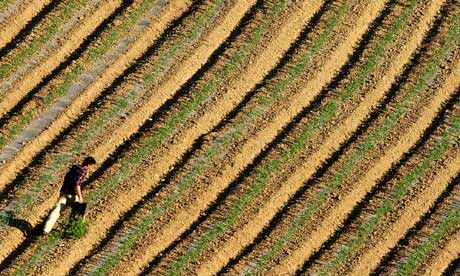
Image source: https://www.theguardian.com/world/greek-election-blog-2012/2012/jun/14/greek-farmers-rent-land-crisis


NEUROPUBLIC is currently working on changing this situation and revolutionizing Greek farming, by introducing smart farming services that are adapted to the specific needs of Greek farmers and making them accessible to them in terms of cost.