Tuesday, August 23, 2016

On the different types of interoperability and the concept of agricultural data

I have been involved in various instances where interoperability between different sources of content was the main issue - ranging from the early days of enriching the Organic.Edunet Web portal and collections with content from external sources (such as the OER Commons Green collection) to complex content aggregation workflows of heterogeneous data in the context of the agINFRA FP7 project (the project that gave birth to AGINFRA) and a recent contract with UN FAO regarding the status and potential of various levels of interoperability in the fisheries and aquaculture sector. All these instances allowed me to get to know more about metadata schemas and vocabularies, standards for exchanging metadata, digital repositories and how they communicate with each other, mapping and transformation of metadata schemes to another standard etc.

I was recently invited to complete a questionnaire regarding open data standards and that brought me back to the basics; what are the different types of interoperability that exist out there? I could very quickly think of the following:
  • Semantic interoperability, referring to the use of standards for the description (metadata) and the classification (Knowledge Organization Systems such as vocabularies) of data;
  • Technical interoperability, referring to the use of standards for the exchange of data, such as the OAI-PMH standard for metadata but also the use of standard file formats for sharing data (e.g. XML, CSV, JSON etc.);
  • Legal interoperability, referring to the use of standard licensing schemes, which would facilitate the exchange of data in legal terms.
There may be a couple more out there but time is short for such an academic analysis.

 (Image source: https://xkcd.com/927/)

The same questionnaire referred to “standards for food and agriculture data”; but what exactly are agricultural data? One (including me) could argue that there may not be "food and agriculture data" as different data types. I have been through similar discussions in the past; however, it seems that there is no such thing as "food and agriculture data". This only refers to various types of data that are used in the agrifood sector or are produced in the agricultural context. In this context, “standards for food and agriculture data” are the same as the rest of the data, such as the standards applying to economic, statistical, trade, weather forecasts, soil maps, sensor data, weather forecasts, earth observation data, demographic, bibliographic, metadata etc. It is usually only the context that changes - not the standards or the data themselves.

If we accept this generic point of view, then standards like ISO (see for example the ISO/IEC 11179 standard), metadata standards like Dublin Core, file format standards like ODF, classification standards like OWL and linked data standards like RDF could also be applied in the case of agricultural data. The same goes for technical interoperability standards like OAI-PMH and REST APIs; all these can be (and actually are widely) used in the agricultural sector and are essential tools for those of us working with agricultural information and knowledge management.

So, are there really agricultural data and if so, who could name some examples?

Saturday, August 13, 2016

Using social media for increasing awareness at corporate level

Background 

Let’s get things straight from the start: As (at least some of) you know, I am an agronomist (holding a PhD from the Agricultural University of Athens / Dept. of Agricultural Biotechnology), and I have a relatively long experience in the field of agricultural information & knowledge management as well as in the participation of various EU projects (ranging from Leonardo da Vinci to ICT-PSP, FP7 & Horizon 2020), always in the agrifood sector. Through my participation in these projects, I had the opportunity to work on a wide variety of different activities, such as the design and delivery of training courses for agricultural trainers, organization of information and knowledge (e.g. courses, publications and other material) in digital repositories, description of digital resources with metadata and classification with Knowledge Organization Systems), interoperability between different content management systems and digital repositories, metadata management workflows and many-many more. Through this experience I managed to have a different view of agriculture, the one of research outcomes/publications and how these can (and should, in some cases) be freely and openly accessible to anyone interested (this is what Open Access is about) – the same applied to research data (open data). In this context, I recently had the opportunity to combine my background in agriculture/agronomy and my experience in information and knowledge management with social media (which I personally consider extremely useful tools for professional purposes as well). I spent quite some time as the Marketing & Networks Manager of Agroknow, where I had the opportunity to set up existing digital marketing channels and grow the existing ones.

A photo posted by Vassilis (@vprot) on


When I started working for NEUROPUBLIC, a company of a larger scale and different structure compared to the ones that I have worked for in the past, I faced a big challenge: How could I apply my experience in a different (but still not unknown) context, the one of smart farming (or precision farming) and related ones like remote sensing, earth observation, Internet of Things in agriculture etc.? While the means would remain the same, it was obvious that I would need to adapt the approach and the analysis of the specific ecosystem – referring not only to individual stakeholders but also to organizations that are activated in the same field as NEUROPUBLIC. In any case, the main point is to find the best possible way to expose to external stakeholders all this interesting work that takes place in NEUROPUBLIC (but was not communicated at all, during the last years). This was exactly the pain of NEUROPUBLIC and this would be one of my roles in the company.

Activities

The first step in the process was the analysis of the current status of the social media accounts of NEUROPUBLIC (referring to its corporate pages on Facebook and LinkedIn). Then, I took some time to set up a corporate Twitter account, which I consider a necessary communication and outreach mean for a company like NEUROPUBLIC. The last in line was the setup of the corporate blog, which I hope that it will provide an alternative mean of expression and outreach for the company staff. It only became the last in the list due to the fact that it takes a lot of design and planning and we wanted to get things started immediately - at this time, the blog has been set up but we are internally testing content management workflows and roles so it's not public - yet.

At the same time, I had to find the sources from which I could mine content related to the company that I could then promote through the aforementioned social media channels – the corporate website was a great start as it already contained a wealth of information about the company and its work along with great visual content. On top of that, I did some research regarding quality sources of news related to the thematic areas that NEUROPUBLIC is activated in; in this way, we would not only share our corporate news but we would also draw the attention of those activated in the same context.

Before I were in the position to promote NEUROPUBLIC’s work to external stakeholders, I had to achieve a deep understanding of them: this translates to countless hours of studying related documents, slides and other types of publications for better understanding concepts like precision agriculture, remote sensing, earth observation, NDVI, IACS, LPIS, even CAP etc. and see how they are integrated in the Smart Farming outcomes of NEUROPUBLIC, such as the GAIA Sense network of the GAIATron telemetric stations, GAIA Agronomy, GAIA Irrigation, GAIA Shield etc.

Last but not least, I keep studying the networks in which NEUROPUBLIC is a member of, such as the European Association of Remote Sensing Companies, the Big Data Value Association, the Alliance for Internet of Things Innovation and the Global Open Data for Agriculture and Nutrition (GODAN) and follow their activities, trying to establish and maintain contact, as well as to provide feedback when needed. I also check out further networking opportunities - social media are extremely useful in this case, too.

Next steps

The next steps are more or less typical for this type of work: (i) Keep social media frequently updated, (ii) establish connections and (iii) make the most out of them - opportunities exist even in social media. :-)
The progress can be evaluated (partially, from my point of view) through the analytics tools provided by each channel. I believe that there is no need for complex reports and focusing on these metrics (vanity metrics as many call them). An increasing number of followers, likes and shares is an indication that what you are doing is good and draws the attention of people but since the company does not sell its products through social media there’s no point in focusing on them. Instead, my approach is that social media in cases like NEUROPUBLIC should be used for keeping people informed about the activities of the company and show a constant activity on social media. My experience says that the rest will follow.

Thursday, August 4, 2016

Challenges in the digital transformation of Greek agriculture (and the role of Smart Farming)

I have to admit that despite my agronomic studies (PhD in Agricultural Biotechnology), I was not familiar with the concept of digital farming and I was only recently introduced to smart farming. On the other hand, I had a pretty long experience in agricultural data - referring to data produced in an agricultural context or used for improving agriculture. I recently found myself working for NEUROPUBLIC, a Greek SME that is designing and developing smart farming services - and smart farming makes use of various types of data for providing informed advice to farmers. Bingo!

Image source: http://www.nesta.org.uk/blog/precision-agriculture-almost-20-increase-income-possible-smart-farming

But what are some of the benefits of smart farming (in general)? Here’s an indicative list:
  1. Minimizing the production costs through the calculated and rationalized application of inputs (irrigation, fertilization and crop protection) as well as the necessary labour cost (through better management and reduction of specific agricultural activities).
  2. Improved quality and increased production yields through the optimization of the inputs.Improved competitiveness of the agricultural products in the global market through the reduced production cost, the improved quality and the standardization of the processes (which allow for traceability).
  3. The minimization of inputs’ application allow the produce to meet the strict criteria defined not only at EC level, but also from specific wholesale buyers, such as large retailers (who usually set even higher standards).
  4. Contribution to the improvement of the local ecosystem’s and environment’s quality through the rationalized application of inputs as well as water conservation (referring to the water needed for irrigation - which may amount up to 70% of total water consumption). 
Agriculture is probably the most important sector in Greece in terms of exports' value; at the same time, Greek farmers do not seem to be eager to adopt modern farming approaches - for various reasons:
  1. Low income: The high cost of the investment required for introducing technological advances in farming (e.g. for smart farming) is prohibitive for Greek farmers, most of which are smallholders.
  2. High fragmentation of agricultural land: Agricultural parcels in Greece are highly fragmented and farmers usually own remotely located fields, a fact that does not favor the application of traditional smart farming approaches which show their real potential in huge, homogeneous farms.
  3. Low adaptation rate: The majority of Greek farmers (as the rest of the European ones) are elderly and therefore tend to follow traditional approaches in farming, inherited from father to son. They are hard to follow technological advances and they trust their own, proven cultivation practices. (however, recent reports show that a new wave of educated people is engaged in farming, therefore this situations seems to be changing for the better).
  4. Lack of education: Greek farmers are not fully aware of the advantages of the adoption of smart farming and they directly make the connection between the smart farming concept and huge, hi-tech tractors and other agricultural machinery equipped with GPS sensors, screens and antennas, running up and down huge, monotonous fields (a view that is far from the typical Greek farm).
  5. Lack of motivation: Greek farmers do not feel the urge to adopt new approaches. For example, policies developed for the application of the Common Agricultural Policy (CAP) in Greece seem to be on the “safe side” and promote traditional farming approaches instead of “pushing” farmers to explore and adopt modern ones.
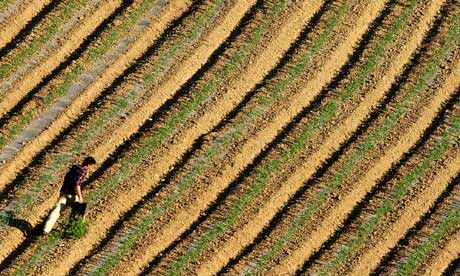
Image source: https://www.theguardian.com/world/greek-election-blog-2012/2012/jun/14/greek-farmers-rent-land-crisis


NEUROPUBLIC is currently working on changing this situation and revolutionizing Greek farming, by introducing smart farming services that are adapted to the specific needs of Greek farmers and making them accessible to them in terms of cost.

Monday, July 25, 2016

Being featured by Taylor Swift

It's funny but it does the work ;-)
And no, I didn't refer to Taylor Swift during my presentation! It's a funny concept by the Open Data Institute (ODI) team, who seem to be really fond of Taylor Swift :-)

Saturday, July 16, 2016

Discussing about open data during MEDHackathon 2016

MEDHackathon 2016 took place in Patras, Greece, between 13-15/7/2016 - it was organized by various organizations including ERFC and SDI4Apps and hosted by the University of Patras in the lovely Conference Cultural Centre. MEDHackathon consisted of two main parts:
  1. A Conference on the first day, followed by
  2. A hackathon on the next two days - open data in different contexts and types. 
Both events were international, attracting participants from Greece, Latvia, Czech Republic and Slovakia, Norway etc.
I had the pleasure to attend the first two days of the event and in fact to make a presentation on how NEUROPUBLIC makes use of open data in its smart farming services. It has been a long time since I last participated in a Conference and a bit longer since I last made a presentation.The presentation provided some information on the status of open data in the agricultural sector, provided examples of open data in terms of types and formats and then showed examples of commercial uses of open data in commercial applications. The presentation concluded with the description of NEUROPUBLIC's GAIA Sense network consisting of a number of telemetric stations (GAIATrons) that are developed in-house and explained how the sensor data of these stations are combined with open earth observation data from the Copernicus program of the European Space Agency (ESA) to provide meaningful services to farmers.


Doing business with Open Data in agriculture by Vassilis Protonotarios

The Conference included presentations from the Greek public sector (describing the progress and status of opening up governmental data) as well as from private sector (focusing on how they make use of these data). It has been a great experience and allowed me to get to know some really interesting people like Nikolas Petropoulos from ERFC (organizers and hosts of the event), Visiting Prof. Fotis Nanopoulos (ex General Director of EUROSTAT and a person full of interesting stories to share), Irene Matzakou (Intrasoft International, really focused on projects and also active on social media like me!), Ery Zisi from the Greek Ministry of Agriculture (the person responsible for the ministry's open data!), Kalliope Aggelakopoulou (legal advisor and active contributor to the official Greek Open Data portal) and many-many more.


At the same time I had the pleasure to meet some old friends and colleagues like Karel Charvat (he was among the organizers of this event), Pavlos Georgiadis (We Deliver Taste / CAPSELLA), Prof. Vassilis Makios (Corallia) and others.

During the 2nd day of the event (which was also the first day of the Hackathon), I had to pass the floor to my colleague Thanasis Manos as I had to leave (and get back to the office) after I made a presentation of NEUROPUBLIC's challenge.


If you want to get an overview of what happened during MEDHackathon 2016, you can check out the Twitter hashtag #MEDHackathon for short comments and lots of photos from the event. The event was also broadcasted live through the University of Patras's Web TV.

Overall it was a nice experience, which combined the presentation of our work (the GAIASense network), setting up a challenge for the hackathon based on GAIATron sensor data and some useful networking among the participants.

Tuesday, April 12, 2016

Getting things done during a project meeting...with a Windows tablet

I recently had the opportunity to attend a consortium meeting of the OpenMinTeD Horizon 2020 project; I am personally involved in the dissemination and training activities, representing Agroknow. I was expecting that during the meeting I would have to keep notes using a GDoc, revise my slides through PowerPoint, browse the Web, check and respond to emails, update the Agroknow social media accounts and maybe edit some additional documents.

Last time I participated in a project meeting, I used my Acer Aspire One 751h netbook; an under-powered machine, which was recently upgraded to 2GB of RAM but still featured a slow Atom Z520 CPU @1,3GHz and a GMA500 graphics chipset. It runs on Windows 10 Home Edition and it's not that most responsive OS I've used on it, so the night before the meeting I decided to install Lubuntu (a lightweight flavor of Ubuntu), with which I am familiar. I also setup Libre Office and Dropbox, so that I would have access to my files. However, mostly due to the fact that Google Chrome & Chromium were so heavy on resources, using the netbook even for light tasks (e.g. for blogging) was a terribly time-consuming process. This was the time I swore that it would be the last time that I am using the netbook for such purposes. Since then I replaced Chrome with Midori but haven't had the chance to test it.

This time I also went light but with a different workhorse; a 10,1-inch Turbo-X WinTab; a Windows 10 tablet with detachable keyboard that features 2GB of RAM, a Z3735F CPU at 1.3GHz and Intel HD graphics - as well as 32GB of storage. Based on testing I did over the previous months, the tablet is much more powerful than the netbook and can be actually used for work. My setup included the tablet with its keyboard, my external hard disk with Thunderbird Portable and my 22GB inbox, a mouse, a micro-USB charger, USB sticks and cables (micro-HDMI to HDMI, in case a spare monitor was around, micro-USB to USB in case I needed to use the micro-USB port of the tablet with a USB device etc.).

A photo posted by Vassilis (@vprot) on

Things went pretty well: I managed to revise a couple of slides before my presentation using PowerPoint Mobile, kept notes in a Google Doc and worked on two blog posts in our Wordpress-powered blog, updated Agroknow's Twitter and Google+ account etc. Multitasking with 3-4 tabs open in Microsoft Edge, a document open in MS Word and the slides in PowerPoint was managed efficiently by the tablet. In addition, thanks to the WiFi, I was able to download all files that I needed through the Dropbox web interface (I have not installed Dropbox app due to limited storage size and the fact that syncing would take up precious resources). However, I had some hard times during the meeting:
  1. I was lucky to be really close to a power outlet; my micro-USB cables are pretty short and I had an extension power cord with me, just in case. It was a good thing that I did not need that. I am expecting a 2m micro-USB cable from Amazon during the next days.
  2. It was the first time that there was no laptop set up for the presentations, so I had to ask the project partner that presented right before me to use her laptop. My micro-HDMI to VGA adapter is on its way from the UK, also from Amazon.
  3. The keyboard was probably the weakest link; not only keys are smaller than usual making fast typing a challenge, they also make a lot of noise. Or to be more precise, as I am a heavy typist, I think that the whole keyboard made squeaky sounds while it was pressed against the hard wooden desk.
Apart from that, everything was fine; I even had the chance to take the tablet only (no keyboard attached) during a session that took place in a different room. If I had a laptop with me, I wouldn't have bothered. I noticed though that the tablet with keyboard attached was not much lighter compared to my 15,6-inch home laptop, which was pretty strange...or I was just tired!

After testing it under real conditions, I believe that WinTab could also by my work horse in the next project meetings; however, I will make sure that I will have a micro-HDMI to VGA adaptor this time!

Sunday, March 27, 2016

How can we use data for improving food production?

Food security is one of the hottest topics nowadays; with a constantly growing population that is expected to reach (and even exceed) 9 billion by 2020, and the traditional food production systems reaching their limits, new, innovative ways need to be followed in order to ensure that there will be enough food for everyone in the upcoming years. What is strange is that at the same time, huge amounts of food are going to waste on a daily basis; in EU alone, more than 100 million tones of food are going to waste annually.

Image source: http://ecosmartworld.com/new-law-france-forces-grocery-stores-reduce-food-waste/

Intensive and industrial agriculture exhibit higher yields of cultivated crops but the price is high: The (increasingly high) use of pesticides, insecticides, herbicides and fertilizers, among other chemicals, has its toll on the ecosystems, flora and fauna at a small and larger scale. Traditional crop varieties are replaced by hybrids resistant to plant pests and diseases; these hybrids are sterile and may be harmful to useful insects, disrupting the ecosystems. Even domain giants like Sygenta have realized the impact of the excessive inputs in agriculture and introduce initiatives like the Good Growth Plan, which makes use of data for allowing the reduction of inputs thus minimizing their environmental impact. On the other hand, the much safer and environmentally-friendly organic agriculture cannot provide alone the response to the increased demand for food, as yields are usually lower and the effort needed is higher, leading to increased (labor) costs.

Can data help address this issue?
The answer is yes and it seems that data can help in different ways. The use of data can help in making informed decisions and educate stakeholders; for example, the use of appropriate data can help in the identification of the most appropriate crop varieties for a given location, affect the amount of inputs required for pest & weed control, the volume of water for irrigation required etc. Such data can be collected through various means, such as sensors, maps (including soil and climate), related publications, reports, images (e.g. aerial ones) even social media (Twitter has been used for sharing data at a global scale). The example of the Good Growth Plan is a good one as it makes use of various types of data collected over the years in order to help minimize the harmful inputs used for increasing yields. The recently published Discussion Paper of the Global Open Data for Agriculture and Nutrition, titled "How can we improve agriculture, food and nutrition with open data?" also provides a wealth of examples where open data has contributed to a better (and cleaner) agriculture and food production.
A more radical approach comes from the Open Agriculture initiative of MIT's Media Lab, which is working on open source agriculture, by designing and building food computers that ensure the application of optimal environmental and nutritional conditions for plants cultivated in growth chambers; this allows the growth of e.g. vegetables under controlled conditions that have been considered as optional based on "recipes" or values that have been determined based on data aggregated from various sources as well as through testing and experiments. Needless to say that no pesticides, herbicides etc. have any place in this way of growing food.


According to Caleb Harper, Director of the Open Agriculture Initiative, "In the future, even broccoli will have an IP address. Ultra-efficient, sensor-packed urban farms will collect huge quantities of information on every crop they grow and develop data-driven insights into what makes a tomato tastier and a head of broccoli grow faster. That information will be shared, and global agriculture will improve". (You can read the full article here; if you have more time, just watch the video above).

The point is that data can indeed lead to a better and environmentally sound framework of food production; what we need are efficient means for collecting, organizing, analyzing & sharing data, as well as a mean for transforming this data into meaningful (and useful) recommendations that will drive the agricultural practices. This is not science fiction; it is something that already takes place (maybe in an unorganized way so far) so it is up to us to grab it, adapt it and use it.

Why am I telling you all these? I recently got involved in CAPSELLA, one of Agroknow's new projects which aims (among others) to support local communities of farmers and food producers in making informed decisions on their activities by allowing them to access related and high-quality data from various open data sources as well as social media. The project will work on making existing data more easily available to these stakeholders through innovative ICT solutions that will be built on their requirements. And we are referring to food producers that have opted to operate in a way that will benefit the environment and agrobiodiversity, respecting natural resources (so away from industrial agriculture) so they could use all the help they could get from existing data that will allow them to increase their yields and grow higher quality food.

It's all about the data after all, isn't it?

Saturday, March 26, 2016

Call for Papers: 10th International Conference on Metadata and Semantics Research (MTSR’16)

MTSR_2016

The 10th International Conference on Metadata and Semantics Research (MTSR'16) will be held at the Food and Agriculture Organization of the United Nations (FAO) in Rome (Italy) on November 22-25, 2016. Traditionally, MTSR brings together scholars and practitioners with common interest in the interdisciplinary fields of metadata, data and semantics. The conference provides an opportunity for participants to share knowledge and novel approaches in the implementation of semantic technologies across diverse types of information environments and applications, such as Cultural Informatics, Open Access Repositories and Digital Libraries, E-learning applications, Search Engine Optimization and Information Retrieval, Research Information Systems and Infrastructures, e-Science and e-Social Science applications, Agriculture, Food and Environment, Bio-Health & Medical Information Systems.

This year, MTSR’16 celebrates the conference’s 10th anniversary with the theme of bridging the past, present and future of metadata, data and semantic technologies. The organisers encourage prospective authors and conference participants to reflect on the following questions:
  • How the documented evidence produced over the past years can be used as a driver for innovating management and processing of data and information?
  • How close are we from the vision of building powerful learning systems that will meet the needs of modern societies through high quality data infrastructures and data-driven interfaces?
  • What are the main challenges that modern metadata and semantics research has not addressed yet?

What is of interest to our agrifood community is the Special track on Metadata and Semantics for Agriculture, Food & Environment (AgroSEM'16), which aims to bring together researchers and practitioners that are dealing with theoretical, methodological, experimental and application-oriented aspects of knowledge engineering, applied to agriculture, food and environment. This year, AgroSEM is chaired by Juliette Dibie & Liliana Ibanescu from AgroParisTech & INRA and we kindly invite anyone to contribute with a submission on metadata, semantics and related topics always in the field of agriculture, food and the environment. Agroknow has a tradition in participating to AgroSEM either through submissions or through contributions to the Programme Committee.

If you are interested in submitting a paper to MTSR 2016/AgroSEM 2016, you need to check out the following deadlines:

15th May 2016 : Submission deadline
30th June 2016 : Notification of acceptance
10th July 2016 : Camera-ready papers due
22nd – 25th November 2016 : Conference at FAO of the UN (Rome, Italy)

You can find detailed information about MTSR 2016, such as practicalities and submission processes, on the event's website.

Sunday, March 20, 2016

Working with legal interoperability in the fishery and marine sciences

One of the most interesting things that I have been working on during the last weeks is related to an analysis of data sources and stakeholders in the fisheries and marine sciences in terms of legal interoperability - a work taking place in the context of a contract with the UN FAO Fisheries and Aquaculture Department. What I am actually contributing to a detailed deliverable for the EGI-Engage project is an analysis of data stakeholders in the marine and fisheries sciences, major data sources and licensing schemes available (the latter being the most important part of my contribution to the deliverable). The aim of this work is to identify major obstacles in terms of legal interoperability between existing data sources in the specific sectors, identify common patterns in their licensing schemes and come up with recommendations that will facilitate data exchange between these data sources, thus enhancing data use, reuse and sharing and allowing the development of data-powered services on top of them.

My involvement in this work allowed me (along with my colleagues Babis Thanopoulos who is coordinating our contribution and Theo Kontogiannis) to participate in a really interesting meeting organized on 17/3/2016 at the FAO premises in Rome, Italy by the FAO team. The aim of the meeting was to present this ongoing work to people from various departments of FAO (e.g. legal, communications, geospatial etc.) that attended the meeting so that they could express their opinion and explore opportunities for the application of the methodology in other contexts as well. The meeting was chaired by Marc Taconet, Chief of FAO's Fishery Statistics and Information Branch (FIPS) while Anton Ellenbroek from the FAO Fisheries and Aquaculture Department & Eise Van Maanen, a consultant working with the UN FAO team on this work. In the audience there were also people working for a really long time on information and knowledge management, like our good friend and collaborator Johannes Keizer and Stephen Katz. The meeting allowed us to present the work done so far and get valuable feedback from the participants, who provided a different view on the topics presented.


Despite the fact that for me was just a one-day trip, it seems that it was enough time for presenting our work, getting feedback for it, discussing the next steps, interviewing a couple of interesting (and interested) FAO staff members and meeting good friends like Johannes Keizer, Thembani Malapela and Fabrizio Celli from FAO AGRIS and AIMS. Meeting experiences and knowledgeable people like Marc Taconet (who I last met in the European Open Science Workshop last November after meeting him for the first time during the joint CIARD/GODAN consultation meeting in April 2014) and Anton (among others), is a great experience and potentially a start for new collaborations and interesting work

There is still quite a lot of work to be done in the context of the deliverable to be produced and submitted so I guess you'll hear more about it in the next months. :-)


Παρέχοντας από το 2009 έως σήμερα εξειδικευμένες υπηρεσίες που βοηθούν τη γεωπονική γνώση και πληροφορία να γίνει διαθέσ...

Wednesday, March 9, 2016

Facilitating access to educational and learning resources: Experiences so far

As you may already know this week (March 7-11) is the Open Education Week 2016 - an initiative that aims to raise awareness of free and open sharing in education and the benefits they bring to teachers and learners. The event takes place at a global level and is coordinated by the Open Education Consortium, a global network of educational institutions, individuals and organizations that support an approach to education based on openness, including collaboration, innovation and collective development and use of open educational materials.


I wanted to take the opportunity to write something relevant to this concept, as a small contribution to this global event - and it seems that the best I could think of is our (as Agroknow) contributions in facilitating access to educational resources, mostly in green topics.

I have been working with green educational projects and initiatives for quite a long time now; starting back in 2009 with the eContentPlus project Organic.Edunet, which led to the development of a multilingual green learning portal that featured about 11,000 educational resources appropriate for various levels of green education. The portal was further enhanced in the context of the Organic.Lingua ICT-PSP project, which not only added domain-specific automatic translation features to the portal, but also worked on the evolution of the metadata schema (Organic.Edunet IEEE LOM AP) and the ontology (Organic.Edunet ontology) used for the description and classification of these educational resources respectively. The Organic.Edunet Web portal is open and available to anyone.


Other projects like the Leonardo da Vinci Organic.Balkanet and CerOrganic ones worked mostly on developing specialized training curricula for the organic farming sector. These courses were made available through a learning portal called Multimedia open learning environment (MOLE), a fully-featured course management platform with multimedia capabilities. While the platform required a free registration for accessing most of the material, it supported the Organic.Edunet IEEE LOM AP and the OAI-PMH protocol for publishing the metadata records with other platforms. The Herbal.Mednet project also worked on the development of educational material for the vocational training sector, focusing on the organic medicinal and aromatic plants.

Our latest projects (both as Agroknow and individual members) include the recently completed GreeNET and the still ongoing Green Learning Network. The former created an inventory of Best Practices related to sustainable development and environmental protection, an Discovery Space for green OER on these topics and other related (and useful tools) - all available through the GreeNET Hub. At the same time, Green Learning Network working on developing a network of educators, agriculturalists, institutions, learners and user communities in Lifelong Learning, has created a number of OER hubs for different types of educational communities, namely Higher, School, Informal and Vocational - all of them featuring discovery spaces for the discovery and retrieval of high quality OER in the corresponding fields. These hubs are enhanced with social sharing options, that facilitate access to and sharing of OER with existing colleagues and online communities through social media.


We also had the pleasure to actively contribute to two other projects working on the ECVET (European Credit system for Vocational Education and Training framework) sector, namely ECVET-STEP and the Agricultural Alliance for Competence and Skills based Training (ACT), which focused their work on mapping the existing training curricula, opportunities and skills with competences standardized in the context of ECVET.

On top of that, I had (and still have) the opportunity to represent Agroknow in educational networks that are interested in the promotion and facilitation of access to OER, like the European-based EdReNe (Educational Repositories Network); and let's keep in mind that Agroknow is also activated in other educational networks like the ARIADNE Foundation and GLOBE (Global Learning Objects Brokered Exchange) which work in providing the necessary technical and policy developments for the global educational and learning communities. Last but not least, Agroknow is actively involved in the Global Food Safety Partnership, a global initiative led by the World Bank aiming at combining food safety training and technical support so developing countries can improve their food safety systems and benefit from better compliance with food safety standards (Agroknow has developed a GFSP demonstrator for the vocational training material of interest to GFSP) .


More updates on Agroknow's contribution to the OER communities will follow soon - especially with the launch of AGINFRA that will facilitate the interoperability and connection of various educational and learning initiatives in the agri-food sector at a global level, by providing the required infrastructure and services for enabling this. Stay tuned for more info!